Spider Solitaire - Card Games
- 4.5
- Rating
- 1.00M
- Installs
- Free
- Price

 Analysis by App-foxy
Some card games ask for your full attention, while others are better suited to the small gaps in an ordinary day. Spider Solitaire - Card Games belongs firmly in the second group. I found its appeal in the familiar rhythm of arranging cards, clearing a sequence, making a mistake, and deciding whether the position is still recoverable. It is a free card game from Conifer limited, designed around the classic Spider Solitaire format rather than a large collection of side activities.
That focus is important. This is not a game I would open when I want a story, a competitive ladder, or constant novelty. I would choose it when I want a quiet mental exercise that can last a few minutes or stretch into a longer session. The store summary calls the classic game addictive, but my experience is more measured: its pull comes from the satisfaction of finding order in a messy layout, not from dramatic rewards or a busy presentation.
The game has an average rating of 4.5 from around 15 thousand ratings, and it has passed over one million installs. Those figures make sense for a familiar solitaire title that is easy to understand immediately. It is free, suitable for Everyone, and available for devices running Android 6.0 or later. The current version is 2.5.13, while the game first appeared on October 27, 2022.
You May Also Like

 Blood Strike: 2.5 Anniversary
Blood Strike’s Loadouts Turn Every Drop Into a Tactical Gamble
A close look at Blood Strike’s custom loadouts: how fast access to signature weapons reshapes its battle royale rhythm, rewards preparation, and narrows the gap between fights.

 Pandora - Music & Podcasts
Pandora’s Music Is Easy to Start, but Harder to Recover
Pandora’s strength is its low-effort path from a seed to a station. Its weak spot is how much confidence it asks you to place in connection, setup, and quiet recovery.

 8 Ball Pool
 Is Built on Rivalries, Rematches, and Routine
A close look at the rivalries, rematches, shared routines, and unanswered safety questions that turn a quick pool match into a persistent mobile community.

 Samsung Music
’s Quiet Strength Is Playing What You Already Own
Its reach comes less from spectacle than from dependable access to a personal library. That simplicity is both the app’s strongest retention engine and its ceiling.

 AccuWeather: Weather Radar
AccuWeather Review: A Quick, Clear Forecast for Everyday Decisions
For everyday plans, the best forecast is the one you can understand quickly. AccuWeather makes rain timing, radar, and local conditions easy to act on, with a few trade-offs.

 Hill Climb Racing
Why Hill Climb Racing Still Turns Crashes Into One More Run
A tiny car, a bumpy hill and one more upgrade: Hill Climb Racing keeps resurfacing because its simple chaos makes every near-miss feel personal.
More From Our News Desk



A quiet card table with a clear visual language
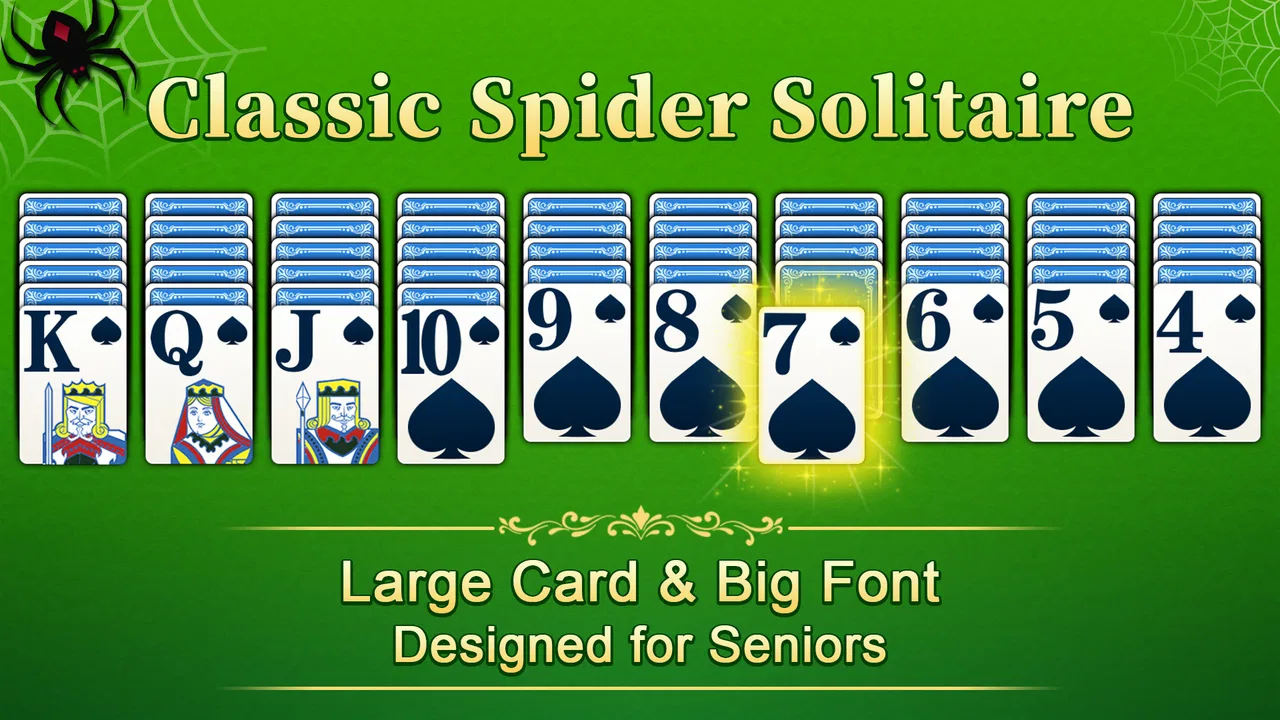
I find a restrained visual style especially useful in Spider Solitaire because it leaves the important work to the cards: spotting what can move and what a choice might uncover. That clarity can make a quick session feel deliberate rather than hurried, though it also means the game’s appeal depends more on enjoying the puzzle than on visual spectacle. Next, I’ll look at how that simple presentation shapes the pace of a hand.
The first few minutes feel immediately familiar
My first impression was shaped by how little explanation the game needs. Spider Solitaire is recognizable to anyone who has played a traditional computer or mobile solitaire game, so I could begin arranging cards without learning a new world, cast of characters, or set of rules. That directness is one of its strongest qualities. The game gets to the card table quickly and lets the puzzle provide the interest.
The visual identity supports that purpose. Instead of asking the player to interpret a complicated setting, it keeps attention on the playing area and the changing relationships between cards. In a card game, that restraint matters. A decorative interface can look attractive in screenshots but become tiring when the player must repeatedly scan columns and distinguish playable cards from blocked ones.
I also appreciate how the classic format gives the game a kind of visual stability. The cards are the setting, the layout is the landscape, and every newly exposed card changes the situation. That creates a small but readable drama: a hidden card may open a useful move, or it may leave a column awkwardly blocked. The art direction does not need a fantasy backdrop to create atmosphere because the arrangement itself supplies the visual story.
The best part of the presentation is its discipline: the cards remain the subject rather than becoming decoration around the subject. That makes the game comfortable for repeated sessions. I can imagine playing it while waiting for an appointment, during a short break, or at the end of the evening when I want something more active than watching a screen but less demanding than a full action game.
Why the simple setting works better than a busier alternative
Many mobile card games try to stand out through oversized effects, themed tables, collectible systems, or a constant stream of challenges. Those approaches can be enjoyable, but they also change the reason for playing. In this game, the setting stays close to the traditional card-table idea, which makes it a better fit for someone who wants solitaire itself rather than a progression game wearing solitaire clothing.
That simplicity also helps with concentration. Spider Solitaire requires me to remember which cards are covered, which sequences can move together, and which empty spaces should be used carefully. A crowded interface would make those decisions feel slower for the wrong reason. Here, the visual mood is quiet enough that the difficulty comes from planning rather than from decoding the screen.
There is a trade-off, though. Players who expect a strong visual personality may find the experience plain. I would not recommend it to someone choosing a card game primarily for elaborate artwork or a sense of place beyond the table. The restrained presentation is useful, but it is not likely to be the main reason that player stays.
Sound and the pace of a single hand
The mood of a solitaire game depends as much on pacing as on graphics. Spider Solitaire works best when I treat each move as part of a gradual process rather than rushing to clear cards. The turn structure naturally creates pauses: I scan the columns, consider whether moving a sequence will reveal something, and then decide whether to commit. That gives the game a steady rhythm that suits short, low-pressure play.
I find this especially useful when I want a break without completely switching off my brain. A hand can occupy my attention in a gentle way. It is not the same as meditation, because I still have to calculate consequences, but it avoids the frantic tempo of many modern mobile games. The atmosphere comes from repeated small decisions rather than from countdowns or combat.
Sound is most effective in this kind of game when it stays subordinate to the cards. I would keep the volume modest and let the visual movement carry most of the feedback. That choice fits the setting: a quiet card table is more convincing than an overproduced soundtrack would be. If you prefer games with strong musical themes, voiced characters, or dramatic audio cues, this is unlikely to satisfy that expectation.
The pacing also makes the game practical in situations where a larger game would be inconvenient. I can stop after a few moves, return later, and continue the same mental thread without needing to remember a complicated story. That is one of the less obvious strengths of a classic card format: the player can build a routine around it instead of rearranging the day around the game.
How to play more thoughtfully instead of moving too quickly
The most useful habit I developed was to avoid treating every available move as a good move. In Spider Solitaire, exposing a hidden card is often more valuable than making a visually tidy stack. Before moving a sequence, I look at what the move reveals and whether it creates a useful empty space. A move that looks productive can reduce future options if it blocks the only flexible column.
I also try to preserve flexibility in the early part of a hand. Moving cards simply because they fit can leave several columns with similar problems. When I have a choice, I prefer the move that opens information or keeps more cards available for later rearrangement. This is a small strategic distinction, but it changes the game from automatic sorting into a real planning exercise.
Another practical tip is to use short sessions for learning your own habits. If I lose repeatedly, I do not immediately blame the layout. I check whether I am committing empty spaces too early, breaking a useful sequence for a minor gain, or drawing new cards before making all sensible moves from the current layout. That self-review gives the game more depth than its simple appearance suggests.
Where the mechanics match the mood
The mechanical design and the presentation are aligned because both encourage patience. The objective is familiar, but the route toward it is not always obvious. I may begin with a promising set of cards, then reach a point where the safest-looking move is actually the one that closes off a column. That tension creates the game’s central rhythm: observe, rearrange, reveal, and reassess.
This is also why I would not describe the game as purely relaxing. It can be calming, but a difficult hand still asks for attention. The atmosphere is gentle while the decisions remain meaningful. For me, that balance is more satisfying than a card game that removes nearly all resistance in the name of comfort.
At the same time, the classic format has limits. Once I have played several hands in a row, the basic loop can begin to feel repetitive. The pleasure depends on enjoying incremental improvement and the changing shape of each layout. Players who need new mechanics, narrative goals, or direct competition may reach that limit quickly.
That is where alternatives can be better. A competitive solitaire app may suit someone who wants leaderboards or timed pressure. A broader card collection may be preferable for a player who wants several rulesets in one place. A puzzle game with a campaign may offer a stronger sense of progression. I would choose this title over those options only when I specifically want a focused Spider Solitaire session without extra systems taking over.
Everyday use: a small routine rather than a major commitment
A realistic use case is a ten-minute pause between tasks. I can open the game, play carefully through a few moves, and stop when the break ends. There is no need to prepare a team, remember a quest, or coordinate with another person. That makes it a good companion for waiting rooms, public transport, or a quiet morning coffee, provided I am comfortable giving the cards enough attention to make the session worthwhile.
It can also work as an evening wind-down, but I would use it differently then. I would play slowly, avoid chasing a quick finish, and focus on making sensible choices rather than forcing a win. The game’s calm setting supports that approach. It gives my mind a narrow problem to solve without demanding the emotional investment of a competitive match.
For older players or anyone returning to mobile games after a long break, the familiar rules are a genuine advantage. The Everyone content rating also makes the game broadly approachable. Still, familiarity should not be confused with universal appeal. Someone who dislikes solitaire’s repetitive structure will not find enough variety here simply because the interface is polished or the game is easy to start.
What the practical details mean before installing
The free price removes the main barrier to trying it, especially for someone who already knows they enjoy Spider Solitaire. Conifer limited is the developer, and the game’s broad install base suggests that it has found the audience looking for this traditional format. I would still approach it with the right expectations: free access is useful, but it does not automatically mean the experience will suit every playing style.
Device compatibility is also straightforward for many Android users because the minimum requirement is Android 6.0. If you are using an older phone or tablet, that requirement is the first thing to check before spending time looking for the game. On a compatible device, the main question is not whether the game is technically ambitious; it is whether its focused card-table loop matches what you want from a mobile break.
The version number, 2.5.13, indicates the release currently associated with the game. I would treat that as a useful reference when checking whether my installed copy is current, especially if the game behaves differently after an update. For everyday play, however, the more important point is that this is an established, focused card title rather than a newly experimental concept.
Who should choose it, and who should skip it
I would recommend Spider Solitaire - Card Games to someone who wants a familiar card puzzle with a calm visual mood, a steady pace, and enough decision-making to prevent it from becoming a completely automatic activity. It is particularly suitable for short sessions, quiet routines, and players who enjoy improving their choices rather than collecting elaborate rewards.
I would skip it if my priority were social play, a strong narrative setting, frequent content changes, or a large menu of different card games. I would also look elsewhere if I found traditional solitaire layouts too repetitive. In that case, a puzzle title with varied objectives or a multiplayer card game would probably provide a better long-term fit.
The most important trade-off is clear: the game gains focus by giving up breadth. Its classic format makes the first session accessible and its atmosphere coherent, but the same focus can make later sessions feel familiar in a way that some players will read as comforting and others will read as limited.
The atmosphere verdict
After spending time with it, I see this game as a deliberately modest card experience. Its art direction keeps the playing area central, its sound and pacing support concentration, and its mechanics create a quiet cycle of planning and discovery. Nothing needs to shout for attention because the changing card layout supplies enough tension on its own.
That coherence is the reason I would recommend it to a friend who wants a dependable solitaire option. I would describe it honestly as a focused, free Spider Solitaire game rather than a complete entertainment package. It is at its best when I want a calm mental pause, a familiar ruleset, and a game that can begin and end without ceremony.
My final view is positive, with one clear condition: enjoy the card puzzle itself. If that is what you are looking for, the restrained presentation and measured rhythm make the experience easy to return to. If you need spectacle, competition, or constant variety, the same qualities will feel like limitations. Choose it for the quiet satisfaction of making one good move after another, not for features it was never designed to provide.
FAQs for Spider Solitaire - Card Games
01What are the main features of Spider Solitaire - Card Games?
Spider Solitaire - Card Games offers a classic card game experience with a variety of customization options. Players can choose from different themes and backgrounds, adjust difficulty levels, and enjoy smooth animations. The app also features daily challenges, a hint system, and an option to undo moves, enhancing the overall gameplay experience.
02Is Spider Solitaire - Card Games free to download and play?
Yes, Spider Solitaire - Card Games is free to download on both Android and iOS platforms. While the game is free to play, it may offer in-app purchases for additional features, themes, or to remove ads. Be sure to check the app details on the store page to understand any potential costs.
03Does the game require an internet connection to play?
Spider Solitaire - Card Games can be played offline, allowing you to enjoy the game without an internet connection. This makes it convenient for playing during commutes or in areas with limited connectivity. However, certain features, like daily challenges or updates, may require an internet connection.
04What kind of support is available if I encounter issues with the app?
The app provides support through a help section within the game, where users can find answers to common questions and troubleshooting tips. Additionally, you can contact the developer via email or through their website for more specific issues. Check the app’s support page for detailed contact information.
05Are there any accessibility features in Spider Solitaire - Card Games?
Spider Solitaire - Card Games includes several accessibility options to enhance user experience. These may include adjustable text sizes, color contrast settings, and voice-over compatibility for visually impaired players. It's recommended to explore the settings menu after installation to customize the game to your needs.
Pros
- Intuitive controls make gameplay smooth.
- Offers daily challenges for added fun.
- Multiple difficulty levels to suit all.
- Minimal ads enhance the gaming experience.
- Offline mode available for travel.
Cons
- Limited customization for card designs.
- Occasional lag on older devices.
- No multiplayer option available.
- In-app purchases can be pricey.
- Limited soundtrack variety.

Spider Solitaire - Card Games
Gallery